ORSNZ is holding its Annual General Meeting online on Wednesday the 23th of March 2022, 3:10 – 4:00pm. This meeting will be followed by a meeting of Council from 4:00 – 4:30pm.
The meeting will be held online using Zoom. Meeting ID: 941 6539 2709 Passcode: 627770 Meeting Link
If you cannot attend the meeting, you can assign a proxy to vote on your behalf using the 2nd page of this form. (So long as the form is emailed to secretary@orsnz.org.nz by Wednesday morning, that is fine.)
Please see links below for a call for applicants for a new permanent lectureship at Engineering Science (1.0 FTE in the Department).
Note that the call says “We encourage applications from people who identify with groups that are typically underrepresented in the Engineering sector”, i.e., women applicants would be particularly welcome.
ORSNZ is holding its Annual General Meeting online on Wednesday the 23th of March 2022, 3:00 – 4:00pm. This meeting will be followed by a meeting of Council from 4:00 – 4:30pm.
The meeting will be held online using Zoom. Meeting ID: 941 6539 2709 Passcode: 627770 Link
Honorary Treasurer’s report and financial statements;
Quarterly SIG presentations / panel discussions;
Update on Website;
Future Conferences;
Election of officers and auditor;
Other business.
If you cannot attend the meeting, you can assign a proxy to vote on your behalf using the 2nd page of this form. (So long as the form is emailed to secretary@orsnz.org.nz by Wednesday morning, that is fine.)
Nga mihi o te tau hou Pakeha! (Happy – Western – New Year!)
It feels like the summer break is well and truly over now (it may have been over for some time for many of you). I wanted to wish everyone in ORSNZ the best for 2022 and start making more frequent posts here given there are now less opportunities to meet in person.
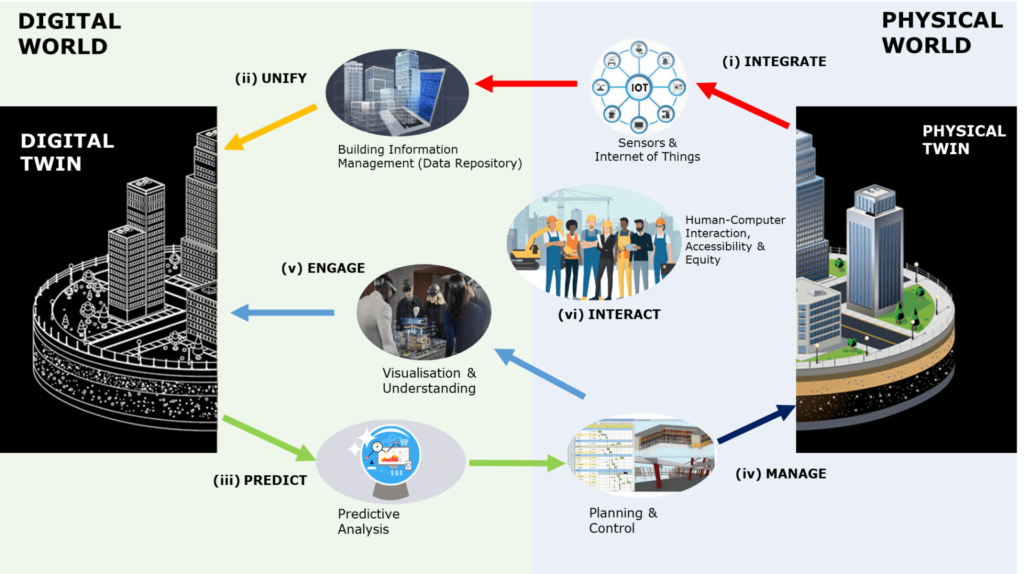
I was chatting with a friend of mine over the weekend who supplies equipment to manufacturers. He explained how their equipment offered a chance for good workflow improvement, but that this opened up a can of worms as the manufacturing company they were engaged with started wondering about what other improvements could be made and, consequently, paused on any commitment until they could think things through more fully. During our conversation I realised that the manufacturers needed a digital twin to help decision making. Many of us know digital twins as simulations although I think there is more emphasis on visualisation and integration of real-time data with digital twins. As the conversation evolved it seemed like many of his customers had similar needs, i.e., they were keen to make improvements but had no easy way to evaluate and decide on which improvements to make and how. This conversation demonstrated to me the continued and perhaps increasing relevance of operations research.
To me, the trend of the last 10 years or so has been: 1) “Get the data”; 2) “We’ve got the data, now what?”, “Look at the data!” – analytics and visualisation; 3) “We’re looking at the data, what is it telling us?”, “Let’s look for trends or try and see what will happen next!” – data science and machine learning.
In many cases steps 2 and 3 were enough to inform improved decision making, but for complex systems like integrated manufacturing lines, hospitals, even NZ public health, being able to experiment with and evaluate the effect of decisions is key for improved decision makers. Understanding a complex system and effects of changes to that system is one of the main goals of simulation. Combining simulation with good visualisation and near real-time data, i.e., making the simulation a digital twin, improves the interpretability and utility of the simulation for supporting good decision making.
I recognise that operations research can also automate decision making via, e.g., mathematical programming, but just understanding the effect of decisions throughout the entirety of a complex system via a digital twin can bring better decision making.
Ngā mihi if you have read this far. Please don’t hesitate to get in touch if you’d like to discuss digital twins or anything else OR-related.
I’ve decided to write some regular posts about what is going on with ORSNZ, and also give my thoughts on OR in NZ and around the world more generally. These will be “Inside ORSNZ” posts so you should be able to recognise and filter them appropriately 😊
The ORSNZ Council recently commissioned a strategic review of ORSNZ with an eye to redeveloping and revitalising the ORSNZ website as the hub of the society. This strategic review has been completed and the Council is now deciding on whether to proceed with the website refresh.
Unfortunately, COVID-19 and its latest (Delta) incarnation means that for the 2nd year in a row there will be no ORSNZ Annual Conference. This is a real shame as the Annual Conference is a great opportunity to catch up and see what everyone has been up to. I hope the website refresh, if it goes ahead, will be able to fill this gap a little in the future by creating a more vibrant online community for ORSNZ. ORSNZ can also provide some funding for smaller local or research area events particularly through the Special Interest Groups (SIGs) or RIGs (Regional Interest Groups).
A couple of other “hats” that I wear have given me some interesting insights recently.
Since July this year I have been Deputy Director of Te Pūnaha Matatini and observing the diversity of modelling and the focus on impact, both within the community and at a policy level, has been really exciting. The value of transdisciplinary research is being recognised within the research landscape and one of our Council members recently remarked (on transdisciplinary research) that “It all sounds like what OR has been doing for 70 years.” I wholeheartedly agree with this and over the last 5 years it seems to me that modelling in general and OR modelling in particular has had somewhat of a renaissance due to the wealth of data now available and the greater acceptance of models. One example of this is a research project simulating the critical care system in Aotearoa New Zealand that Ilze Ziedins, Cameron Walker and I worked on. Much of the recent modelling has been under the news “brands” of artificial intelligence (AI) and data science. I think there are also exciting new opportunities for combining machine learning and traditional OR models for real-world decision making.
With respect to AI, I am one of the Aotearoa New Zealand representatives in the Global Partnership on AI (GPAI), working in the AI and Pandemic Response Working Group. I am co-leading a project on Immediate Response to the Pandemic and have had a chance to review multiple AI initiatives being used to combat COVID-19. I was pleased to see a reasonably standard integer programming approach being used to balance patient numbers across hospitals within US states. The full living repository of AI initiatives for pandemic response can be found here.
OK, that is enough from me for now. Please don’t hesitate to reach out with comments/questions and let me know if there is anything you would like publicised next month.
I’m writing to let you know about two APORS events next year.
The first is APORS 2022 in Cebu, Philippines. 500 word abstracts are due by April 1, 2022 (and can be submitted from Februrary 1, 2022). More details can be found on the Call for Papers.
The second is the online Winter School of Operational Research in Public Health EmergencieS (ORPHES) – a partnership with the World Health Organisation (WHO), EURO, Global Outbreak Alert and Response Network (GOARN) and APORS. Applications are due by December 1, 2021. More details can be found on the short and long versions of the Call for Applicants.
Please see email below from Andy Philpott about Peter Whittle who recently passed. Andy has also provided the Memorial Tribute for Prof. Whittle generously shared by Frank Kelly.
Noho ora mai, Mike
“I just learnt from Cambridge that Peter Whittle died on August 10, at the age of 94.
Peter, who was born in Wellington, was Professor of Operational Research at Cambridge for many years, and is unarguably New Zealand’s OR GOAT. He won both the von Neumann theory prize and the Lanchester Prize and was a FRS. I unearthed this YouTube interview that was done by Frank Kelly a few years ago, that gives you an overview of his contributions.